


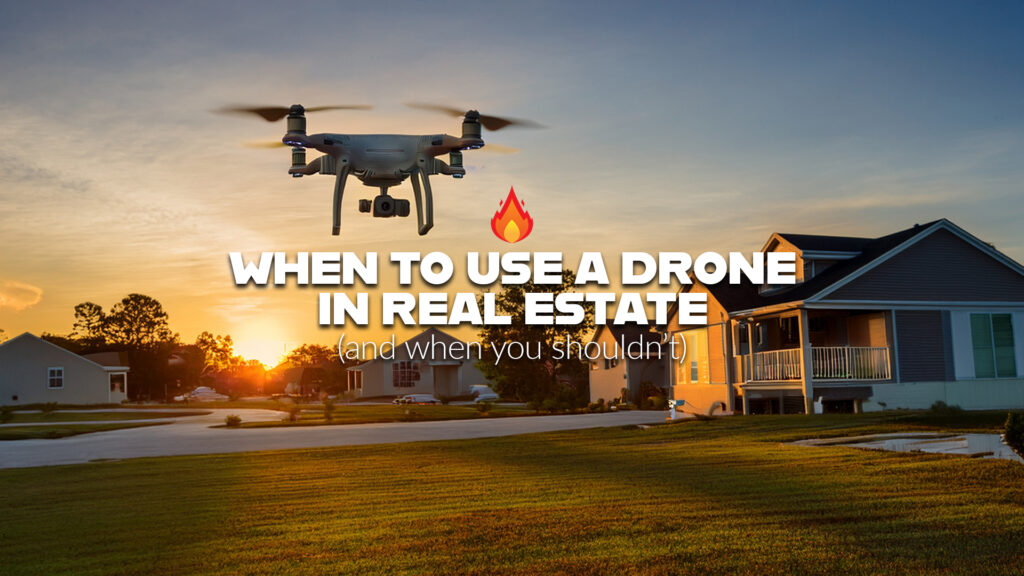
Why You Shouldn’t Use a Drone Just Because It’s Cool:

If you’re in real estate, you’re probably aware of drone footage being used in listings. But here’s the truth: drones aren’t just for flashy visuals — when used strategically, they add context, storytelling, and value.
In this post, you’ll discover:
- The three core reasons drone visuals can make a listing stand out
- When a drone truly makes sense — and when it doesn’t
- Tips to make sure your aerials work hard for your listing
- How this applies to both residential and commercial properties
1. Land for Sale — Show Shape, Size & Surroundings
Why ground shots alone fall short
Listing 10, 20, or 50 acres with only ground photos forces buyers to guess. They can’t visualize boundaries, terrain, or nearby features — which can cause hesitation or undervaluation.
What drone shots deliver
- A clear aerial footprint — boundaries, landmarks, roads, and water
- Real topography — slopes, flatland, and tree lines
- Visual proximity — nearby development or access roads
- Smooth aerial motion — a sense of scale and layout
Example
One 25-acre listing we captured looked average from the ground. But once we launched the drone, everything changed: a hidden plateau, a private pond, and prime buildable space came to light. The listing immediately generated more qualified buyer interest.
Pro tips
- Start wide, then descend for tighter details
- Keep altitude moderate for both scope and clarity
- Include fences, roads, or tree lines as orientation anchors
- Consider adding annotations or property outlines if appropriate
2. Properties with Acreage — Reveal the Full Estate
The risk of under-selling
When a listing sits on several acres, limiting visuals to the house undersells the property. Buyers want to understand what they’re really getting — and drone footage tells that story instantly.
What aerials spotlight
- Gardens, tree lines, and open pastures
- Trails, ponds, or wooded sections
- Outbuildings, barns, or guest spaces
- Scenic views and surrounding terrain
Narrative power
Aerials help buyers imagine themselves exploring the land — driving down the private road, walking the pasture, or watching sunsets across open fields. That emotional connection can’t be achieved with interior photos alone.
3. Lifestyle & Location — Context Is Everything
Proximity is part of the story
Location sells. And nothing conveys convenience or lifestyle like an aerial view showing nearby amenities. Whether it’s a great school, shopping center, or quick access to the highway — drone shots make it visible.
What aerials can convey
- Neighborhood layout and traffic flow
- Access to retail, dining, and recreation
- Distance to schools or main routes
- Lifestyle tone — from quiet country to urban energy
Use aerials as your storyteller
Start your drone footage wide to show the area, then move in to the home itself. This sequence helps buyers picture how they’ll live there — not just where the property sits.
4. When Not to Use a Drone
Drones are powerful, but not always necessary.
- Small lots or tight neighborhoods: There’s often little to showcase beyond what professional photos capture.
- Restricted zones: Always check for no-fly areas or FAA limitations.
- Unfavorable weather: Poor light or wind can reduce quality and professionalism.
- ROI considerations: For some lower-price listings, professional photography may be all you need.
Ask yourself: Will this aerial truly add clarity or impact? If yes, it’s worth flying.
5. Drones in Commercial Real Estate
For commercial listings, drones are indispensable. They give potential investors and tenants an operational perspective ground shots simply can’t match.
What to highlight
- Site plans, parking layout, and accessibility
- Proximity to major roadways and traffic flow
- Adjacencies — retail, industrial, or residential zones
- Building visibility and signage opportunities
In commercial real estate, drone visuals don’t just tell a story — they communicate functionality, potential, and scale.
6. Best Practices for Drone Footage That Sells
| Element | Best Practice |
|---|---|
| Shot List | Combine wide sweeps, boundary lines, and orbit shots |
| Lighting | Film during golden hour for soft, flattering light |
| Weather | Aim for clear skies, calm wind, and consistent brightness |
| Editing | Use overlays, smooth transitions, and accurate color grading |
| Safety | Always follow FAA rules and fly with certified pilots |
7. Conclusion
Drones are more than a cool gadget — they’re a storytelling tool that gives buyers confidence, excitement, and understanding. Whether it’s a piece of land, a sprawling estate, or a commercial property, aerials provide context that traditional media can’t.
When you’re ready to elevate your listings and stand out from the competition, we’re here to help.
👉 Visit MediaEngageLLC.com to see our work, explore our drone services, or book your next shoot.
A huge thank-you to everyone who’s been trusting us with your listings — your partnership means everything.